Cruise health preparation: medicines, seasickness and onboard care
Prepare cruise health questions, medication documents and onboard-care arrangements, with links to CDC guidance and insurance planning.
Jump to a section
Prepare for health needs before sailing, especially when a sea day puts shore-based care farther away. Discuss your itinerary, existing conditions, medications and planned activities with a healthcare professional who knows your situation. Ask the cruise line what the specific ship can and cannot provide.
This guide organizes practical questions and documents. It does not diagnose symptoms, select medicines or provide a treatment plan. If you become unwell aboard, contact the ship's medical team promptly rather than using a travel article to decide whether care can wait.
What matters for your decision
- Clinician: Personal preparation and medicine questions.
- Cruise line: Specific ship services and arrangements.
- Insurer: Coverage, payment and emergency assistance.
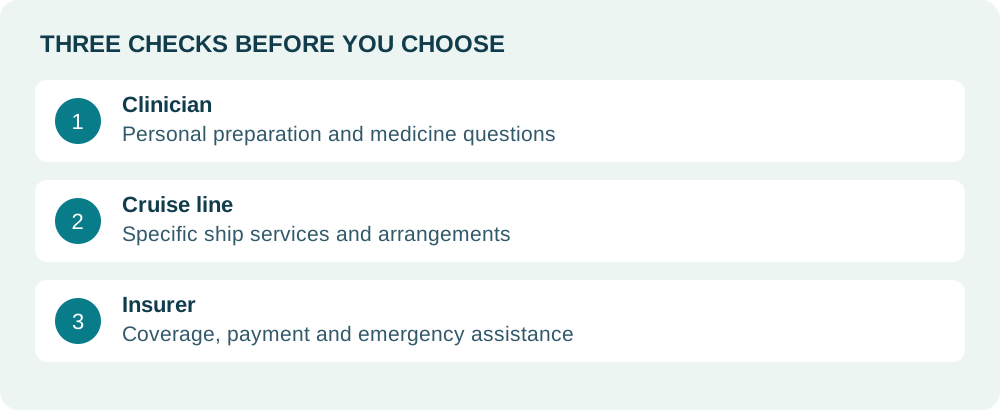
| Decision | What to confirm |
|---|---|
| Clinician | Personal preparation and medicine questions |
| Cruise line | Specific ship services and arrangements |
| Insurer | Coverage, payment and emergency assistance |
Discuss seasickness before choosing a remedy
The CDC's cruise-travel guidance advises people concerned about motion sickness to discuss options with their healthcare provider. Tell that professional about previous reactions, drowsiness, other medicines and activities such as driving after the cruise.
A large ship or a midship cabin cannot guarantee you will not feel motion. Cabin location is a comfort preference, not a treatment. Avoid combining products or changing a prescription on the basis of another passenger's routine. Ask what to do if symptoms continue or seem different from your usual motion sickness.
Check care capabilities and payment arrangements
The CDC Yellow Book's cruise chapter recommends asking the line about the types and level of care available on the particular ship. A medical center is not equivalent to every service at a hospital ashore. Location and evacuation options are relevant when planning for an existing condition.
Ask the operator how treatment is billed, how to obtain itemized records and what payment arrangements apply. Verify your insurer's onboard and overseas coverage separately. Do not assume that a health-insurance card will eliminate an upfront charge or that evacuation takes you to the hospital you would choose.
Carry a medicine plan that works across borders
CDC guidance on traveling with medicines recommends original labeled containers, copies of prescriptions and a supply covering the trip plus possible delays. It also advises carrying medicines in hand luggage. Discuss refrigeration, time-zone changes and injectable or controlled medicines with your clinician and the relevant authorities.
Check restrictions in every destination. The Yellow Book's restricted-medicine guidance explains that legality and import requirements differ and that there is no single comprehensive resource for every country. Permission at home does not establish permission abroad.
Illness before boarding needs truthful reporting
Answer health declarations accurately. If you are ill before travel, seek medical advice and contact the operator through its official process about your options. Do not suppress information to obtain boarding clearance or assume an insurance claim will be approved because a symptom developed near departure.
Preserve relevant medical documentation, operator instructions and cancellation records. The cruise insurance comparison explains how the cruise booking, insurer and separate travel suppliers each have their own conditions. A medical recommendation and a supplier's refund obligation are different questions.
Make the information easy to find
Keep a concise medication list, allergy information, emergency contacts and insurance assistance details in an accessible, secure form. Let a traveling companion know where essential information is kept if appropriate. Record the ship's medical-contact instructions after boarding.
For an excursion, tell the operator about requirements that affect participation through an appropriate private channel. Do not assume an activity rating establishes medical suitability. If care access or an essential service cannot be confirmed, discuss whether a different itinerary would fit your needs better before committing to the trip.
Your decision checklist
- Personal preparation and medicine questions.
- Specific ship services and arrangements.
- Coverage, payment and emergency assistance.
Questions travelers ask
Can I still get seasick on a large cruise ship or with a midship cabin?
Yes, motion symptoms can still occur. Ship size or cabin position cannot guarantee prevention. Discuss your history and suitable options with a healthcare professional before sailing.
What should I discuss with a clinician if motion-sickness medicine makes me drowsy?
Describe the drowsiness, other medicines and the activities you expect to do. Ask your clinician about suitable options and precautions. Do not combine or change products based solely on cruise-forum advice.
How is treatment at the ship's medical center billed?
Ask the line about the specific ship's billing process and obtain itemized records. Verify coverage and claims requirements with your insurer; onboard treatment may require payment before reimbursement is considered.
Must prescription medicines stay in their original containers on a cruise?
CDC recommends original labeled containers and prescription copies for international travel. Check destination-specific requirements, particularly for controlled or injectable medicines; a pill organizer alone may not supply the necessary identification.
Official sources and further reading
Sources checked September 19, 2026. Explore the original policies, destination guidance and provider information behind this article. Each description explains what you will find at the source.
- CDC: Staying healthy on a cruiseCDC advice on cruise health preparation and reducing illness risks while traveling.
- CDC: Yellow Book: cruise ship travelCDC's detailed cruise-health reference covering onboard risks, preparation and medical considerations.
- CDC: Traveling abroad with medicineCDC guidance on packing medicines and checking destination rules before international travel.
- CDC: Traveling with restricted medicinesCDC Yellow Book guidance on destination medication restrictions and preparing the required documentation.