Cruise insurance compared: coverage, costs and when to buy
Compare cruise insurance and cruise-line protection by medical limits, cancellation terms and trip costs. Learn how to request matching quotes and check coverage gaps.
Jump to a section
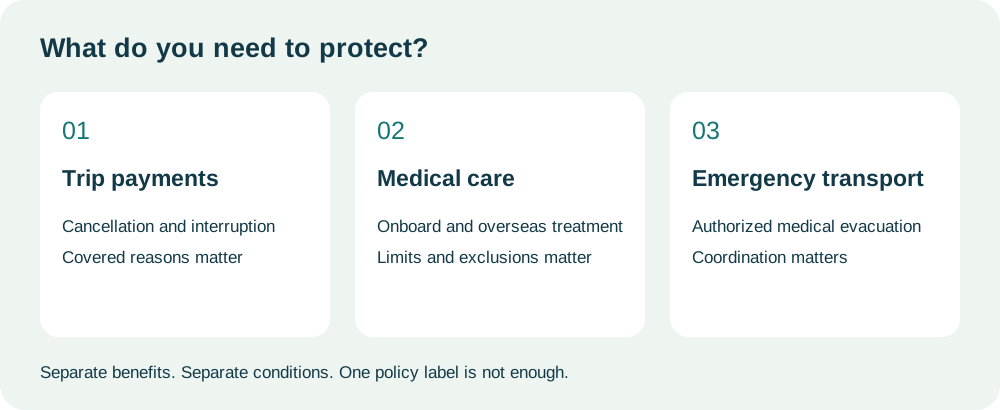
Compare cruise insurance around the losses you need to cover: nonrefundable trip payments, emergency treatment and medically necessary transport. The five independent plans below offer different starting points. Seven Corners has cruise-specific disruption benefits; Tin Leg Gold has a higher medical limit; Allianz OneTrip Prime has a family-pricing feature. Travel Insured FlexiPAX and Travel Guard Preferred provide further comprehensive options to price against your trip.
Consider additional coverage when your existing benefits leave overseas medical or evacuation gaps, or you could not comfortably absorb nonrefundable trip payments. If cancellation costs are manageable and existing medical benefits are suitable, a narrower policy may fit. Compare matching quotes only after identifying the coverage you require.
This comparison is for U.S. residents and was researched September 19, 2026. Recommendations below are editorial judgments based on published benefits and restrictions, not purchased-policy tests or claims-service ratings. Your state-specific certificate, purchase date and eligibility control coverage. Get an insurer's written answer when a medical history or itinerary makes eligibility uncertain.
What matters for your decision
- Compare medical treatment, emergency transport and lost trip payments separately. A large evacuation benefit does not increase the medical-treatment limit.
- Check the current product: Royal Caribbean and Celebrity now advertise higher medical limits than many older comparisons show; Norwegian and Princess have changed their offerings.
- Cash reimbursement and future-cruise credit are different benefits. A 90% credit is not a 90% cash refund.
- Request matching quotes before calling a provider cheapest. Age, residence, trip cost, duration and optional benefits can change the result.
- Buy early enough to preserve any time-sensitive pre-existing-condition waiver or cancel-for-any-reason option. Paying the cruise deposit can start that clock.
| Plan | Best reason to compare it | Main tradeoff |
|---|---|---|
| Seven Corners Cruise Insurance | Cruise-specific connection and itinerary benefits | Each disruption benefit has a defined trigger and cap |
| Tin Leg Gold | Higher emergency-medical coverage | Its travel-delay allowance is relatively modest |
| Allianz OneTrip Prime | Families traveling with eligible children | Lower medical limit than the first two picks |
| Travel Insured FlexiPAX | Choosing optional cancellation flexibility | Optional upgrades increase the premium |
| Travel Guard Preferred | Another comprehensive quote with add-ons | Base medical limit is lower than several alternatives |
Compare medical and transport limits separately
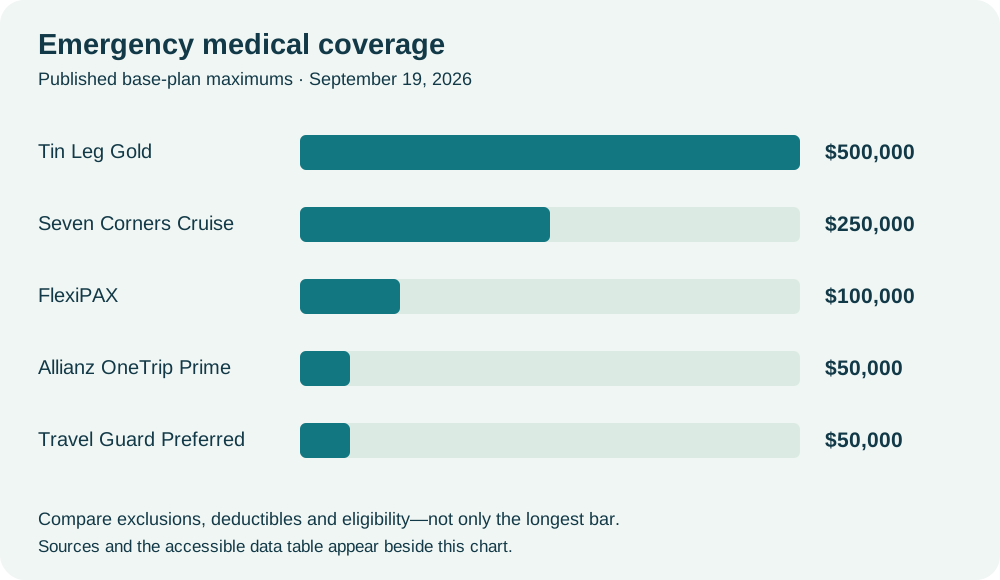
Start with the benefits table, then compare the exclusions that could affect your trip. These are published maximums for the named U.S. products, not guaranteed payments. They are generally per insured traveler; sublimits, deductibles, state changes and coordination rules can apply. Medical and transportation benefits pay different categories of expense, so do not add the columns together as one spending allowance.
The shortlist groups plans by cruise disruption benefits, medical limits, family pricing and optional coverage. It does not rank claim approval rates, customer service or the entire insurance market. The comparison uses official provider materials, cruise-line documents and government guidance. Links lead directly to those sources; paid placement does not determine inclusion. Compare other eligible plans too when requesting quotes.
| Plan and official source | Emergency medical | Emergency evacuation / transportation | Coverage note |
|---|---|---|---|
| Seven Corners Cruise Insurance | $250,000 | $500,000 | Evacuation and repatriation benefit |
| Tin Leg Gold | $500,000 | $500,000 | Primary medical; separate evacuation benefit |
| Allianz OneTrip Prime | $50,000 | $500,000 | Emergency medical transportation |
| Travel Insured FlexiPAX | $100,000 | $500,000 | Base plan; upgrades can differ |
| Travel Guard Preferred | $50,000 | $500,000 | Evacuation and repatriation benefit |
What to check in each independent plan
Consider Seven Corners Cruise Insurance when comparing protection for reaching the ship and losing prepaid port activities. Its cruise-plan summary includes up to $1,500 for a qualifying missed tour or cruise connection, with a daily limit, and up to $500 for a qualifying itinerary change affecting an unused prepaid activity. Each benefit has its own trigger and cap. Check whether the events you want covered meet those definitions, and do not substitute benefits from a differently named Seven Corners product.
Tin Leg Gold is one option to compare when you want a higher medical maximum. Its emergency-medical benefit is primary and reaches $500,000; its Tin Leg: Gold evacuation and repatriation also reaches $500,000. Check the smaller travel-delay allowance: $500 maximum, $150 per day, after a qualifying six-hour delay. Primary coverage concerns which insurer pays first; exclusions and payment procedures still apply.
Allianz OneTrip Prime is a worthwhile family quote because eligible children age 17 and under can be included without an additional premium when traveling with a parent or grandparent; Pennsylvania differs. Its Allianz Travel Insurance: OneTrip Prime plan overview lists $50,000 emergency medical and $500,000 emergency medical transportation. Compare the whole household premium with the same insured costs elsewhere. Free child coverage does not prove this is the cheapest family policy, and a traveler wanting a higher medical maximum should compare the alternatives above.
Travel Insured FlexiPAX suits travelers who want to choose additional flexibility rather than assume it comes with the base plan. The Travel Insured International: FlexiPAX plan and optional upgrades lists $100,000 accident and sickness medical expense and $500,000 emergency evacuation, with optional cancel-for-any-reason and interrupt-for-any-reason benefits. Request both the base quote and the complete quote with your chosen options. Its pre-existing-condition exclusion waiver has a 21-day initial-deposit purchase condition plus other requirements, including insuring applicable prepaid costs and not being disabled from travel. Read all conditions together.
Include Travel Guard Preferred when comparing comprehensive quotes. Its published benefits include $50,000 travel medical expense, a $500 emergency dental sublimit and $500,000 emergency evacuation and repatriation. Optional enhancements change the coverage mix. Compare the medical limit with your needs and obtain the policy for your residence, rather than relying on a brochure from an earlier purchase.
Cruise-line insurance versus an independent policy
Buying protection in the cruise checkout is convenient. An independent policy gives you another way to insure the complete journey, including eligible separately booked flights, hotels and tours. Neither route is automatically better. Ask exactly which arrangements the quoted trip cost includes, whether land travel dates are covered, and who handles assistance and claims. The CDC's insurance guidance distinguishes trip-disruption, medical and evacuation protection; one label on a booking page can hide several different contracts.
A cruise-line package may combine insurance, assistance services and a cancellation waiver supplied by the cruise line. The waiver can follow different rules from the insured benefits. This matters particularly when a noncovered reason earns a future-cruise credit. Do not value that credit at its face amount unless you expect to use it within the terms. It will not necessarily repay your airfare or a hotel booked elsewhere.
The following table is a comparison of named current U.S. offerings. It is not a substitute for your certificate, and the cancellation column describes noncovered-reason flexibility rather than ordinary covered cancellation claims. Older reservations may use earlier products. All listed limits remain subject to covered events, exclusions and any state-specific differences.
| Plan / current source | Medical | Evacuation / transport | Noncovered-reason cancellation feature |
|---|---|---|---|
| Royal Caribbean Travel Protection | $100,000 | $500,000 | 90% future-cruise credit under program terms |
| Celebrity CruiseCare | $100,000 | $500,000 | 90% future-cruise credit; Flights by Celebrity excluded from this feature |
| Carnival Vacation Protection | $20,000 | $50,000 | 75% future-cruise credit under program terms |
| Disney Vacation Protection | $20,000 | $50,000 | 75% future-cruise credit under program terms |
| NorwegianCare: current Arch plan | $50,000 accident / $50,000 sickness | $250,000 evacuation | 90% future-cruise credit; not an insurance benefit |
| Princess Platinum Vacation Protection | $20,000 | $100,000 | 100% future-cruise credit under program terms |
| Holland America CPP Platinum | $20,000 | $75,000 | 90% reimbursement of eligible amounts; cancellation waiver |
| MSC Global Protection: regular cruises | $75,000 medical / dental | $75,000 assistance / transportation | Do not assume CFAR; summary lists covered-reason cancellation |
Which cruise-line plans deserve a closer look?
Royal Caribbean and Celebrity currently list $100,000 medical coverage and $500,000 evacuation coverage. Compare the Royal Caribbean plan and Celebrity CruiseCare on covered reasons, separately booked travel and the usefulness of a future credit as well as those limits.
Holland America's CPP Platinum combines a cancellation waiver with separate insurance benefits. Its Platinum plan explanation describes 90% reimbursement of eligible amounts paid to Holland America for cancellation before covered arrangements begin, subject to its terms. Compare that flexibility with the medical and evacuation limits shown: $20,000 and $75,000 respectively. The cancellation feature alone does not establish suitable medical protection. The published plan is unavailable to residents of New York, Puerto Rico and Quebec.
Norwegian buyers should confirm the product and effective date. Norwegian Cruise Line: Norwegian travel-protection options separates NorwegianCare, Essentials and older BookSafe materials. The current Arch NorwegianCare schedule shows separate $50,000 accident and sickness limits, not $100,000 available for one illness. It also separates $250,000 emergency evacuation from $50,000 repatriation of remains. Older online benefit tables can describe a different policy.
Princess also requires a version check. Its Princess Cruises: Vacation Protection options says Standard protection was available only for bookings made before December 9, 2025. The current cancellation-only option and Platinum package are different purchases. Platinum's 100% future-cruise credit for noncovered reasons is not a 100% cash CFAR benefit, and the published FAQ lists $20,000 medical and $100,000 evacuation. Compare the premium and restrictions against the actual independent quote.
Carnival and Disney both publish $20,000 medical and $50,000 evacuation limits. Carnival Vacation Protection is unavailable to New York residents. Disney's noncovered-reason credit is 75% of the cancellation fee, lasts one year and cannot fund a deposit. New York residents should ask Disney about access to that credit without buying its insurance. MSC uses different documents for purchases before July 1, 2025 and for World Cruises; use its plan directory. Virgin's Virgin Voyages: InVoyage Care FAQs lacks the pre-departure cancellation protection of its full Voyage Protection product.
Should I get cruise insurance? Three questions to answer
First, could you comfortably absorb the nonrefundable cost of canceling? Add the money genuinely at risk on the cabin, flights, hotels and tours; subtract confirmed refundable amounts. If losing that sum would derail your finances, compare cancellation protection for the events you need covered. If you can absorb it, self-insuring that part of the trip may be reasonable. That decision does not answer the medical question.
Second, what pays if you need treatment away from home? Ask your health insurer about shipboard care, every country on the itinerary, deductibles, direct billing and excluded services. Third, who authorizes and pays for medically necessary transport? The U.S. State Department recommends checking medical and evacuation insurance for cruises. A short cruise can still leave you outside your health plan's normal network. A low fare does not make an overseas medical bill smaller.
For a drive-to-port trip with refundable arrangements and documented overseas health and evacuation benefits, additional comprehensive coverage may duplicate protection you already have. For an expensive international sailing, a traveler with limited overseas coverage or a remote itinerary, the case for suitable protection is stronger. This is a decision framework, not a personal coverage determination; ask a licensed insurance professional to resolve policy-specific gaps.
- Prioritize losses you could not reasonably pay yourself.
- Check existing benefits in writing before buying overlapping coverage.
- Keep emergency medical and evacuation decisions separate from the price of your cabin.
Find a lower premium using matching quotes
There is no defensible cheapest provider for everyone without matched quotes. Request the same dates, ages, state of residence, total insured cost and optional benefits from at least three providers and your cruise line. Then remove any plan that fails a requirement. The lowest remaining quote is your starting point. Record the quote date and product version so a cheaper price is not really a different policy.
The NAIC's travel-insurance overview gives roughly 5%–10% of trip cost as a general premium range. The illustration below simply applies that range to hypothetical trip totals. It is not a provider quote, a guaranteed market range or a price promise for older travelers, medical-only coverage or CFAR upgrades. Your actual result may fall outside it.
Compare coverage you already receive from a credit card or health policy, but read eligibility rather than relying on the card's name. Check whether the trip must be paid with that card, who counts as an eligible traveler, and whether medical care is insured or merely supported by a referral service. The CDC's Yellow Book notes that coverage varies. A cancellation benefit does not automatically supply emergency medical insurance.
For multiple cruises, compare an annual policy with separate policies after checking its per-trip duration and cancellation limits. For families, compare household totals and child eligibility. Consider dropping optional CFAR only if you accept the narrower covered reasons. Do not deliberately understate nonrefundable trip costs to lower the price: that can conflict with eligibility conditions for benefits you intended to buy.
| Hypothetical insured trip cost | 5% of cost | 10% of cost |
|---|---|---|
| $4,000 | $200 | $400 |
| $6,000 | $300 | $600 |
| $10,000 | $500 | $1,000 |
When a medical-only policy may be the cheaper route
If you can absorb lost trip payments but need overseas medical protection, ask for a travel-medical quote instead of automatically buying a comprehensive package. That can reduce the premium by narrowing the risks insured; it does not create equivalent coverage. The CDC's consumer guide explains the different jobs performed by travel, health and evacuation insurance.
IMG Patriot International Lite is an example to investigate, not our universal budget winner. Its IMG: Patriot International Lite sample contract (PDF) excludes the insured person's country of residence and the United States from its stated coverage area. Medical maximum choices decrease with age: through 64, options reach $1 million; ages 65–69 reach $100,000; ages 70–79 have $50,000; age 80 and older has $10,000. Those differences make a generic headline maximum particularly unhelpful for seniors.
The sample also has a $1 million emergency evacuation maximum requiring advance approval and coordination. Acute-onset coverage has separate, lower limits and is available only below age 70; it is not a broad pre-existing-condition waiver. Get written confirmation that your exact cruise, embarkation period, ports, shipboard treatment and activities fall within the issued policy. Do not use this international medical product as a substitute for trip-cancellation insurance or assume an Alaska or Hawaii itinerary is eligible.
Cash CFAR, covered cancellation and future-cruise credit
Standard cancellation insurance responds to reasons listed in the policy. Wanting a different vacation or deciding the trip no longer feels appealing is a different question. The NAIC explains that cancel-for-any-reason coverage commonly reimburses only 50%–75% and carries eligibility and timing conditions. Purchase windows, insuring the required trip cost and canceling sufficiently before departure can all matter. Read the actual option, not just the letters CFAR.
Keep the benefit's currency visible in your comparison. In a hypothetical $6,000 eligible loss, 75% cash reimbursement equals $4,500. A 90% future-cruise credit equals $5,400 of restricted future buying power. The second number is larger, but it does not put cash back in your bank account. Neither calculation includes the policy or program cost, any excluded purchases or other recoveries. This arithmetic illustrates the difference; it is not a claim estimate.
A future credit may be useful if you know you will cruise with that line again. Before valuing it, check redemption and sailing deadlines, transfer rules, eligible passengers and what happens if the replacement fare is higher. For covered cancellation, ask the insurer about documentation and the supplier's refund before assuming CFAR is the correct claim route.
| Benefit example | Amount | What you receive |
|---|---|---|
| 75% cash CFAR | $4,500 | Cash reimbursement if all policy conditions are met |
| 90% future-cruise credit | $5,400 | Credit governed by the cruise program's restrictions |
| Self-insuring the loss | $0 reimbursement | You retain the premium but pay the eligible loss yourself |
Seniors, Medicare and pre-existing medical conditions
Medicare deserves its own check. Medicare: Coverage outside the United States says overseas coverage is generally limited, with narrow exceptions. For cruise care, eligibility can depend on whether the ship is in a U.S. port or within six hours of one and whether the doctor may legally provide the services. Some Medigap policies cover foreign emergency care; check your own Medicare Advantage or other supplemental benefits. Neither 'Medicare always covers cruises' nor 'Medicare never covers anything outside the U.S.' is a reliable rule.
For older travelers, compare the premium and the age-specific medical limit together. An inexpensive policy with a sharply reduced limit may be a poor trade. Ask about the definition and lookback period for pre-existing conditions affecting you and relevant family members. Symptoms, medication changes or treatment can matter even when a diagnosis sounds routine. A waiver of an exclusion does not create unlimited coverage for every existing health issue.
Time-sensitive purchase conditions vary. Allianz Travel Insurance: Travel insurance FAQs describes a 14-day first-payment window among its conditions for existing-condition coverage. Other products use different windows. Ask the provider to check the date you first paid any covered trip supplier, the full cost you must insure, fitness-to-travel requirements and later added arrangements. Do this before assuming final payment is the only deadline.
Evacuation, missed ports, hurricanes and shore activities
Emergency evacuation does not normally mean choosing any hospital and sending the insurer the bill. Allianz's transportation explanation describes medically necessary transport and assistance coordination. Establish who authorizes transport, where it can take you and whether search-and-rescue or return-home arrangements are separate benefits. For expedition or remote cruising, check the operator's insurance requirements as well as the destinations. The State Department's insurance guidance highlights evacuation as a distinct consideration.
A changed port is not automatically an insured cancellation. Look for the exact missed-connection, itinerary-change or inconvenience clause, the triggering reason and what expense it reimburses. An airline delay, your own late arrival and a ship's mechanical disruption may be treated differently. A policy can pay for an unused prepaid excursion under defined circumstances without paying you simply for disappointment.
Buy before a known disruption if you want potential coverage for it. Allianz's hurricane explanation treats a named storm as foreseeable for new purchases. Buying after a storm becomes known does not turn its consequences into an unforeseen insured event. Even an earlier purchase must satisfy a covered reason; fear of bad weather alone should not be treated as guaranteed cancellation coverage.
Finally, describe the activities you actually intend to do. Ask about scuba depth and certification, adventure excursions, alcohol-related exclusions, pregnancy-related provisions and planned treatment. This is a reason to read the exclusions before paying for a tour, not to assume every recreational activity is excluded. Match the response to your exact policy and retain the written explanation.
How to buy, compare quotes and make a claim
Build one quote sheet with traveler ages, residence, first-deposit date, departure and return dates, destinations and nonrefundable cost per person. Use the same inputs everywhere. Save the certificate, schedule, endorsements, exclusions, quote and receipt. Read the review or free-look provisions immediately; their length and refund conditions vary. If you find a gap, address it while you still have options.
Before departure, save the assistance number offline and share it with your traveling companion. In an urgent medical situation, seek appropriate emergency help first and contact the insurer's assistance team as soon as possible. Ask about authorization, hospital payment arrangements and required records. Do not assume showing a health-insurance card settles the ship's bill: Royal Caribbean says its onboard facilities do not accept land-based health insurance directly.
For a claim, retain itemized medical bills, payment proof, treatment records, delay notices and the original itinerary. Notify affected suppliers promptly and obtain their refund or credit decisions. Keep a ledger showing each payment, supplier refund, credit, claim number and outstanding loss; disclose recoveries to avoid claiming the same expense twice. Follow the policy's notice and filing deadlines. If a claim is denied, ask for the specific policy provision and the appeal procedure.
Canceling the cruise does not automatically cancel your flights, hotel or tours. Name changes and passenger substitutions are also separate decisions; check permission, fees and linked travel before altering a booking. Our cruise booking and support guide and shore-excursion refund guide help organize those supplier conversations.
Your decision checklist
- Record every traveler's age, state, itinerary and first trip payment date.
- Calculate the nonrefundable trip cost that the chosen benefits require you to insure.
- Check existing health and card coverage for onboard treatment, foreign care and evacuation.
- Compare at least three matching quotes, including your cruise line's exact current plan.
- Verify pre-existing-condition rules and all purchase and cancellation deadlines.
- Identify whether flexible cancellation pays cash or future-cruise credit.
- Ask about excluded activities, transport authorization, deductibles and age-based limits.
- Save the issued certificate and emergency number; review the policy while any free-look window remains.
Questions travelers ask
What is the best cruise insurance?
Compare eligible plans against your medical, evacuation and cancellation needs, then request matching quotes. This guide examines Seven Corners Cruise Insurance, Tin Leg Gold, Allianz OneTrip Prime, Travel Insured FlexiPAX and Travel Guard Preferred for different features. It does not establish one best provider for every traveler or rank claims service.
What is the cheapest cruise insurance?
No provider is reliably cheapest for every age, state and trip. Compare matching quotes and remove policies that fail your coverage requirements. A medical-only plan may cost less when you deliberately self-insure cancellation losses, but it supplies narrower protection and must cover your itinerary.
Should I get cruise insurance for a short cruise?
Consider your medical and evacuation gaps even when the cruise is inexpensive. A three-night fare and an overseas treatment bill are different risks. If existing coverage is suitable and you can absorb nonrefundable trip costs, you may need less additional protection.
Is cruise-line insurance better than third-party travel insurance?
Neither purchase route is always better. Compare the current named policy, separately booked arrangements, medical limits, exclusions and cancellation currency. Some cruise-line plans offer useful flexibility, while independent policies may provide a better fit for a broader trip or higher medical limit.
Does cruise insurance cover a missed port?
Only if the facts satisfy a benefit in your policy. An itinerary-change benefit might reimburse an unused prepaid activity after a qualifying change; it is not necessarily cash compensation for any missed destination. Read the triggering event, limit and documentation rules.
Does cancel for any reason repay the whole trip?
Usually you should expect a stated partial benefit with eligibility rules, not an unconditional full refund. Distinguish cash CFAR insurance from a cruise line's future-credit feature. The percentage, covered cost, purchase window and cancellation deadline all need checking.
Can I buy cruise insurance after booking?
Often yes, if the product remains available, but benefits can narrow as deadlines pass. Pre-existing-condition waivers and optional CFAR can have early purchase windows. A later policy also does not ordinarily cover a disruption that was already known when you bought it.
Will Medicare pay for medical care on a cruise?
Coverage outside the United States is limited and narrow cruise-related exceptions exist. Check Medicare.gov and your supplemental or Medicare Advantage plan for the precise circumstances. Verify shipboard care, foreign treatment and transport separately before relying on existing benefits.
What does cruise insurance exclude even when a policy looks inexpensive?
Possible exclusions involve pre-existing conditions, known events, reasons outside the covered list, certain activities and planned treatment. Limits, deductibles and authorization requirements can also reduce what is payable. The issued state-specific policy governs an individual claim.
Does canceling the cruise cancel my other bookings?
No automatic cancellation should be assumed. Contact each airline, hotel and tour supplier, preserve its decision and track recoveries separately. Their deadlines and penalties can differ, even when the purchases were made for the same cruise.
Official sources and further reading
Sources checked September 19, 2026. Explore the original policies, destination guidance and provider information behind this article. Each description explains what you will find at the source.
- Seven Corners: Cruise Insurance plan benefitsSeven Corners' cruise-specific coverage summary, including medical, connection and itinerary-change benefits.
- Tin Leg: Gold emergency medical coverageThe Gold plan's medical-expense limit and the conditions attached to eligible treatment costs.
- Allianz Travel Insurance: OneTrip Prime plan overviewAllianz's comprehensive-plan benefits, family eligibility provisions and links to applicable plan documents.
- Travel Insured International: FlexiPAX plan and optional upgradesTravel Insured's base benefits and optional protection choices, including cancellation flexibility.
- Travel Guard: Preferred travel insurance planTravel Guard's published coverage, benefit limits and optional enhancements for the Preferred plan.
- Tin Leg: Gold evacuation and repatriationThe Gold plan's emergency transport benefit and the medical and assistance requirements attached to it.
- Tin Leg: Gold travel-delay benefitThe Gold plan's delay threshold, daily allowance and maximum reimbursement for qualifying expenses.
- CDC: Yellow Book: travel insuranceCDC's reference on trip disruption, medical insurance and evacuation coverage for international travelers.
- Royal Caribbean: Cruise Travel ProtectionRoyal Caribbean's protection package, including insured benefits and its separate cancellation-credit feature.
- Celebrity Cruises: CruiseCare protection planCelebrity's medical and travel benefits and the terms of its noncovered-reason cancellation feature.
- Carnival Cruise Line: Vacation Protection planCarnival's travel-protection benefits and the future-credit provisions to distinguish from cash reimbursement.
- Disney Cruise Line: Vacation Protection Plan termsDisney Cruise Line's insurance benefits, purchase conditions and cancellation-credit provisions.
- Arch Insurance Solutions: NorwegianCare benefit scheduleArch's current NCL plan summary, showing separate accident, sickness, evacuation and cancellation provisions.
- Princess Cruises: Vacation Protection optionsPrincess compares its cancellation and Platinum protection products, including eligibility and benefit details.
- Holland America Line: Cancellation Protection Plan: PlatinumHolland America's Platinum waiver and insurance benefits, including eligible cancellation reimbursement.
- MSC Cruises: Global Protection benefit summary (PDF)Generali's benefit schedule for MSC's regular-cruise plan; World Cruise and older-purchase documents differ.
- Norwegian Cruise Line: Norwegian travel-protection optionsNCL's overview of NorwegianCare, Essentials and earlier protection products, with applicable policy links.
- MSC Cruises: Travel and medical insuranceMSC's plan directory, including purchase-date distinctions and separate World Cruise coverage materials.
- Virgin Voyages: Voyage Protection FAQsVirgin Voyages' guidance on its full protection product and when guests can purchase it.
- Virgin Voyages: InVoyage Care FAQsVirgin Voyages' in-trip protection information, distinct from pre-departure cancellation coverage.
- U.S. Department of State: Cruise ship travel adviceU.S. State Department guidance on cruise documents, destination preparation, safety and medical planning.
- National Association of Insurance Commissioners: Travel insurance consumer overviewNAIC explains coverage types, typical cost considerations and cancel-for-any-reason limitations.
- CDC: Travel, health and evacuation insuranceCDC's consumer guide to the different insurance needs travelers should consider before a trip.
- IMG: Patriot International Lite sample contract (PDF)IMG's 2026 policy wording, including geographic eligibility, age-based limits and authorization requirements.
- Medicare: Coverage outside the United StatesMedicare's official rules and limited exceptions for foreign care, including relevant cruise circumstances.
- Allianz Travel Insurance: Travel insurance FAQsAllianz's answers about plan eligibility, existing medical conditions, assistance and claims.
- Allianz Travel Insurance: Emergency medical transportation coverageAllianz explains medically necessary transport, assistance coordination and the conditions of this benefit.
- U.S. Department of State: Insurance for international travelU.S. State Department guidance on checking overseas health coverage and emergency evacuation protection.
- Allianz Travel Insurance: Hurricanes and travel insuranceAllianz explains covered storm-related disruptions and why the timing of an insurance purchase matters.
- Royal Caribbean: Paying for onboard medical careRoyal Caribbean explains onboard medical billing and the records needed to seek reimbursement afterward.