Cruise dining with allergies, celiac disease or kosher requirements
Plan cruise dining requests for allergies, celiac disease and kosher requirements, with preparation questions, advance notice and group fallbacks.
Jump to a section
Resolve essential food arrangements before choosing a cruise. A menu label is useful, but it does not answer how a meal is prepared, served or protected from cross-contact. Start with your own requirements, then ask the operator which arrangements it can confirm for the actual ship and itinerary.
This guide helps organize that conversation. It does not assess whether a particular meal is medically safe for you or replace your clinician's allergy or celiac plan. Bring that plan into the booking decision, especially when a limitation could make the trip unsuitable.
The ship dining directory can help identify the venues you want to discuss with the operator. A restaurant listing is a starting point for that conversation; individual dietary arrangements still need confirmation.
What matters for your decision
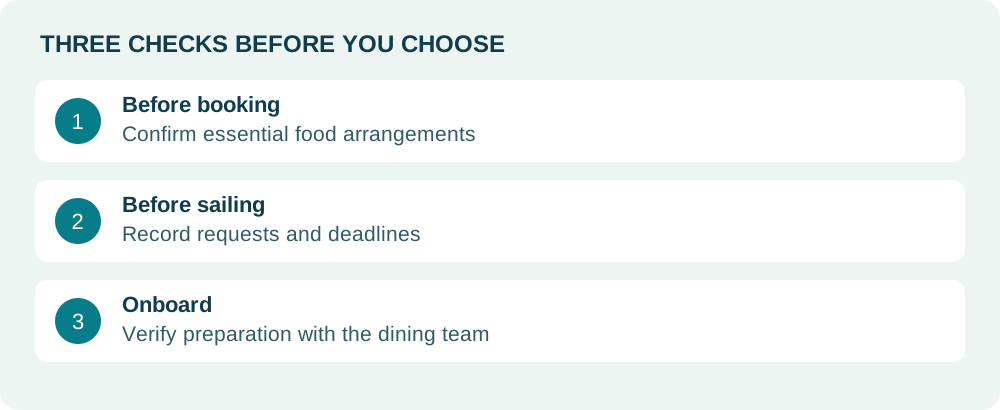
- Before booking: Confirm essential food arrangements.
- Before sailing: Record requests and deadlines.
- Onboard: Verify preparation with the dining team.
| Decision | What to confirm |
|---|---|
| Before booking | Confirm essential food arrangements |
| Before sailing | Record requests and deadlines |
| Onboard | Verify preparation with the dining team |
Put the requirement into the reservation
Write a concise description of the foods or preparation requirements involved and request acknowledgement through the operator's official special-needs process. Ask which venues can accommodate the request, who will coordinate it aboard and what happens on embarkation day, excursions and private-island visits.
Royal Caribbean's dietary FAQ describes available requests and advance-notice requirements. It is a starting point, not a guarantee that every outlet can meet every need. Keep the operator's response with the reservation, and speak to the dining team after boarding to verify the practical arrangement.
Ask about preparation, not just ingredients
The National Institute of Diabetes and Digestive and Kidney Diseases explains that cross-contact can introduce gluten into otherwise gluten-free food. Its restaurant guidance includes discussing ingredients and preparation with the server or chef. A gluten-free label therefore should not end your questions about shared equipment and serving practices.
FARE's cross-contact guidance likewise explains the importance of preparation procedures for food allergies. Ask who will receive your order, how it will be identified and what alternatives are available if staff cannot verify a dish. Do not treat a buffet label, a friendly assurance or another passenger's experience as a substitute for your own clinical plan.
Make kosher requests early and precisely
Royal Caribbean's checked FAQ requests at least 45 days' notice, or 90 days for European/South American itineraries, for listed special products including kosher meals. It separately says Passover requests must arrive 90 days ahead. Regional booking conditions and some wording about late requests differ, so obtain the deadline for your itinerary directly before relying on the shortest interval.
Ask about certification, sealed meals, heating and service arrangements, meals beyond dinner, snacks and shore days. The word kosher alone does not establish the standard or variety you require. If a particular certification is essential, have the operator identify it in writing. Do not contact the line's food suppliers on the assumption that they can approve a passenger request.
Keep preferences separate from medical requirements
A lower-carbohydrate eating preference can often be planned by looking at ordinary menus and choosing suitable combinations, but this is not a prescribed diet. If your food choices relate to diabetes, medication or another medical condition, discuss travel and meal timing with your clinician. Do not improvise treatment around a ship's menu.
For a mixed-needs group, build meals around the person with the least flexible requirements, then give everyone else choices within that arrangement. A shorter, predictable dinner in a venue that has confirmed the request may be easier than a different restaurant every night. The cruise dining and reservation guide helps compare schedules and package commitments.
Prepare a fallback before departure
Ask what happens if a requested product does not arrive or a venue cannot safely provide the planned meal. Check rules for bringing any suitable packaged food you intend to carry, including destination restrictions on taking food ashore. Plan shore-day meals separately; an onboard accommodation does not automatically extend to an independent excursion.
Use the operator's Royal Caribbean: Special-needs request process for relevant service requests and keep medical details in secure communication. If the essential arrangement remains unconfirmed, resolve it before making a nonrefundable commitment. A simpler itinerary or different operator may be the better fit.
Your decision checklist
- Confirm essential food arrangements.
- Record requests and deadlines.
- Verify preparation with the dining team.
Questions travelers ask
How do I arrange gluten-free meals when I have celiac disease?
Record the requirement before sailing, obtain the operator's response, and discuss preparation and cross-contact with the dining team aboard. Follow your clinician's celiac plan; a gluten-free menu does not by itself establish that every meal meets your needs.
How far ahead must I request kosher meals for a cruise?
Royal Caribbean's checked FAQ states 45 days, or 90 for European/South American itineraries, with 90 days for Passover meals. Confirm any regional or itinerary-specific requirement and the actual meal arrangement before booking late.
Can I follow a low-carb eating preference using the regular cruise menus?
For an ordinary preference, inspect current menus and ask about ingredients and substitutions. For a medical dietary requirement, involve your clinician and the operator's special-needs team; this guide does not prescribe a diet or medication adjustment.
Official sources and further reading
Sources checked September 19, 2026. Explore the original policies, destination guidance and provider information behind this article. Each description explains what you will find at the source.
- Royal Caribbean: Dietary restrictions and special mealsRoyal Caribbean's process for dietary requests and the arrangements guests should confirm before boarding.
- NIDDK: Celiac disease: eating, diet and nutritionNIDDK's guidance on gluten avoidance and dietary management for people with celiac disease.
- Food Allergy Research & Education: Avoiding food-allergen cross-contactFARE explains how allergens can transfer between foods, utensils and preparation surfaces.
- Royal Caribbean: Special-needs request processHow to notify Royal Caribbean about accessibility, dietary and other accommodation requests before sailing.