Accessible cruise planning: confirm the route from airport to shore
Plan accessible cruise cabins, airport and port transfers, tender access and shore tours using confirmed features rather than activity labels.
Jump to a section
Start with the features you need at every stage: airport assistance, vehicle access, terminal movement, cabin layout and shore transport. An accessible cabin solves only one part of the journey. A break elsewhere in the route can make an otherwise suitable cruise difficult to use.
Describe your requirements precisely and ask the responsible provider to confirm them. The term accessible can cover different features, and a low-exertion label does not establish step-free access. This guide supports planning and documentation; it does not determine your legal rights or medical suitability for an activity.
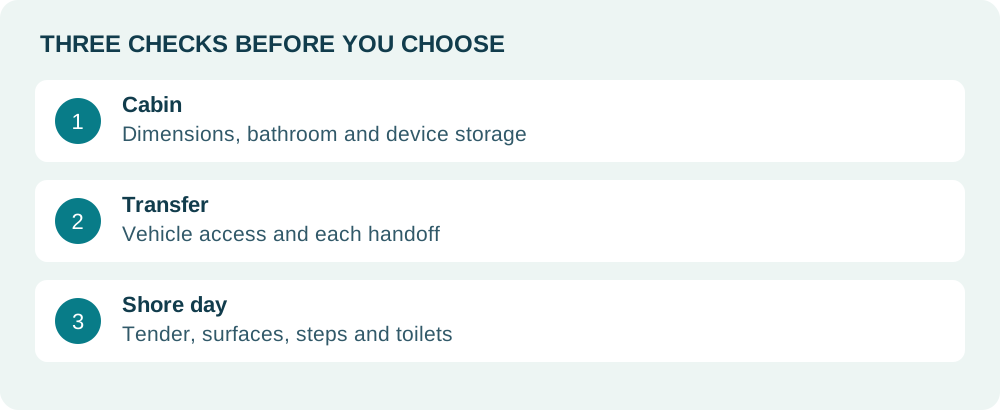
What matters for your decision
- Cabin: Dimensions, bathroom and device storage.
- Transfer: Vehicle access and each handoff.
- Shore day: Tender, surfaces, steps and toilets.
| Decision | What to confirm |
|---|---|
| Cabin | Dimensions, bathroom and device storage |
| Transfer | Vehicle access and each handoff |
| Shore day | Tender, surfaces, steps and toilets |
Match the cabin to the actual equipment
Record your mobility device's dimensions and relevant handling needs. Ask about clear door width, turning space, bed approach, bathroom access, shower arrangement and storage. A larger floor area alone does not establish a workable layout.
Royal Caribbean's mobility guidance describes wider accessible-cabin doors and distinguishes the ship's limited assistance from equipment a guest may need throughout the trip. Confirm the precise cabin and equipment arrangement through the Royal Caribbean: Special-needs request process. Keep the response attached to your booking records.
Check every transfer in order
For each leg, identify the provider, pickup point, steps or lift, device capacity, luggage handling and whether you remain in the device. Airport assistance, a cruise transfer and a hotel shuttle can be separate bookings. Approval by one provider does not automatically notify the others.
Build a simple sequence: airport arrival, hotel, vehicle, terminal, gangway, cabin. Repeat it for disembarkation and the return flight. Confirm who assists at handoffs and what to do if an accessible vehicle fails to arrive. A phone number and a defined alternative are more useful than an unspecified promise to help.
Read beyond the excursion activity label
Royal Caribbean's accessible-excursion descriptions distinguish levels; some require walking short distances, negotiating coach steps or using a collapsible device. A mild or low-activity rating is therefore not equivalent to remaining in a wheelchair for the whole tour.
Ask about the maximum continuous walk, surfaces, slopes, steps, seating, accessible toilets and boarding the actual vehicle. Obtain the measurement or procedure that matters to you, rather than accepting an adjective. Include the route from the ship to the meeting point, which may be outside the advertised tour duration.
Treat tender access as a separate decision
Confirm whether your sailing expects to dock or tender and what the operator's boarding process permits for your device and circumstances. Sea conditions and operational decisions can change access on the day. A destination being advertised on the itinerary does not guarantee every guest can use every landing arrangement.
Choose an alternative you would still enjoy if going ashore is not possible. If a particular port is the main reason for the trip, discuss that dependence before booking. Avoid making a nonrefundable independent tour rely on unconfirmed tender access.
Act promptly if the confirmed cabin changes
Keep the original cabin number and written feature confirmation. If reassigned, tell the operator exactly which required feature is missing and ask for a suitable confirmed resolution. A nominal category upgrade does not compensate for an essential feature that is absent.
Do not voluntarily accept an upgrade whose access details are unknown. Our upgrade-bidding guide explains why location and category can remain uncertain. If a dispute involves accommodation rights or compensation, seek the applicable consumer or legal advice rather than assuming a universal remedy from a travel article.
Your decision checklist
- Dimensions, bathroom and device storage.
- Vehicle access and each handoff.
- Tender, surfaces, steps and toilets.
Questions travelers ask
What should I do if my confirmed accessible cabin is changed?
Contact the operator immediately with the original confirmation and the specific unmet requirement. Request a suitable cabin or other documented resolution before accepting the change. Obtain qualified advice for any unresolved rights or compensation question.
How can I tell whether a low-activity excursion suits limited mobility?
Ask for concrete details: steps, walking distance, surfaces, vehicle access, toilets and device handling. A low-activity rating may still require coach steps or transferring out of a mobility device.
Is an accessible cabin enough for a tender port?
No. Check the tender process separately for the device, traveler and sailing. Conditions may affect access, so retain a suitable alternative if you cannot go ashore.
Official sources and further reading
Sources checked September 19, 2026. Explore the original policies, destination guidance and provider information behind this article. Each description explains what you will find at the source.
- Royal Caribbean: Cruising with mobility disabilitiesRoyal Caribbean's guidance on mobility equipment, accessible accommodations and practical onboard arrangements.
- Royal Caribbean: Special-needs request processHow to notify Royal Caribbean about accessibility, dietary and other accommodation requests before sailing.
- Royal Caribbean: Accessible shore excursionsRoyal Caribbean's accessible-tour information and the mobility requirements to confirm before reserving a tour.